
Architectural Details That Define Interior Character
Custom Woodwork, Millwork & Carpentry in Pittsburgh for homes requiring handcrafted trim, built-ins, and architectural features that standard mill stock cannot replicate
Coffered ceilings, wainscoting panels, and custom staircases expose limitations in pre-milled lumber profiles and standard joinery methods. Shamrock Renovations LLC fabricates custom woodwork and millwork in Pittsburgh using precision carpentry techniques that accommodate out-of-plumb walls, non-standard ceiling heights, and existing architectural details common in older western Pennsylvania homes. Properties with plaster walls, irregular room dimensions, or homeowners seeking one-of-a-kind design elements rely on custom-fit trim, molding, and built-in shelving that aligns with existing structure without visible gaps or forced transitions.
Each project begins with on-site measurements using laser levels and scribing tools to capture wall angles, floor slopes, and ceiling variations that affect how components fit. Premium wood materials such as quartersawn oak, walnut, or maple are selected based on grain pattern, color consistency, and how they accept stain or clear finishes. Custom railing systems, paneling, and feature walls are milled to exact dimensions, test-fitted, then finished off-site before final installation to ensure seamless joints and uniform color.
Request a design consultation to review wood species, joinery methods, and how custom millwork integrates with your home's existing trim profiles.
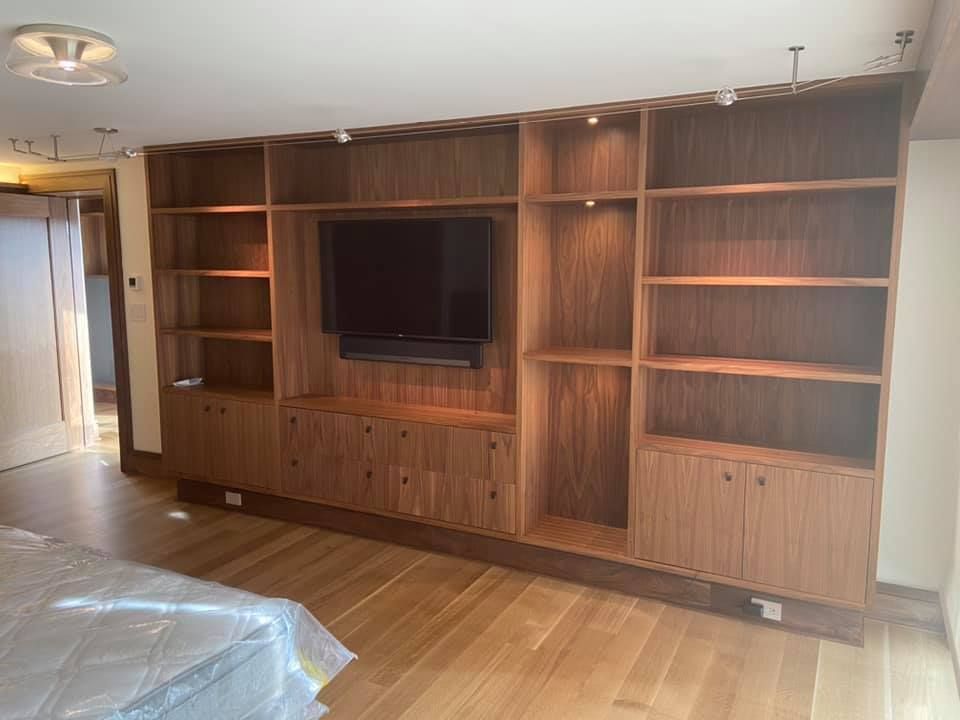
How Custom Carpentry Addresses Structural Irregularities
Built-in shelving, libraries, and media walls are scribed to fit against uneven plaster, concealing gaps with face frames that follow wall contours while maintaining level shelves and plumb uprights. Crown molding is coped at inside corners rather than mitered, allowing joints to close tightly even when wall angles deviate from ninety degrees. Wainscoting panels are sized to maintain consistent reveal spacing despite floor slopes, using adjustable baseboard scribes that mask height variations without visible stepping or wedge-shaped gaps.
After installation, you'll see crisp shadow lines where trim meets walls, shelving that remains level across entire spans, and stair railings that align with newel posts without shims or filler strips. Cabinet doors close flush, drawer faces maintain even gaps, and paneling seams disappear under consistent finish application. Coffered ceiling beams meet at precise angles, and molding profiles transition smoothly between rooms without abrupt size changes or mismatched details.
Finish carpentry at this level requires wood selection free of knots or sapwood in visible areas, joints cut with tolerances under one sixty-fourth of an inch, and fastening methods that avoid surface nails or visible hardware. Shamrock Renovations LLC sources premium lumber, operates calibrated milling equipment, and applies hand-rubbed finishes that bring out wood grain without obscuring natural color variation.
Common Questions About This Service
Custom woodwork involves material choices, joinery techniques, and finish applications that affect both appearance and long-term durability. These questions cover typical considerations for architectural carpentry projects.
What's the advantage of custom milling versus purchasing pre-made trim?
Custom milling allows profiles to match existing historic moldings, accommodates non-standard dimensions, and ensures wood grain direction remains consistent across all pieces. Pre-made trim is limited to current manufacturer catalogs and rarely matches older profiles exactly.
How are coffered ceilings constructed to avoid sagging over time?
Beam boxes are built from poplar or pine frames, then veneered with finished hardwood. Each box is independently fastened to ceiling joists with blocking installed between joists where support is needed, distributing weight and preventing reliance on drywall anchors alone.
When should wood species be selected for custom built-ins?
Wood choice depends on finish preference, structural load requirements, and moisture conditions in the installation area. Walnut and cherry darken naturally over time, maple remains light and accepts stain uniformly, while oak's open grain requires pore filling for smooth painted finishes in Pittsburgh homes with fluctuating indoor humidity.
What determines whether wainscoting is installed as solid panels or frame-and-panel construction?
Solid panels risk splitting across the grain as wood expands with seasonal humidity changes. Frame-and-panel construction allows center panels to float within frames, accommodating wood movement without cracking or joint failure common in older Pennsylvania homes without climate control.
How do custom staircases differ from modular systems?
Custom staircases are built to exact rise and run dimensions dictated by your floor-to-floor height, allowing consistent tread depth and riser height throughout the climb. Modular systems require adapting existing structure to fit standard stair geometry, often resulting in non-uniform bottom or top steps that create tripping hazards.
Shamrock Renovations LLC fabricates architectural woodwork that addresses site-specific measurements, material behavior, and finish expectations. Schedule an in-home assessment to review existing trim details, discuss wood preferences, and evaluate structural considerations for built-in features.