
Basement Finishing & Luxury Lower-Level Living in Pittsburgh for homeowners converting unfinished lower levels into guest suites, entertainment spaces, or multipurpose rooms
Lower Levels Transformed Into Usable Living Space
Moisture control systems installed before framing begins prevent the dampness and musty odors that make unfinished basements unusable—vapor barriers on concrete walls, drainage mats behind framing, and dehumidification equipment sized to the space's cubic footage keep humidity levels below thresholds where mold grows. Shamrock Renovations LLC finishes basements in Pittsburgh where egress windows, code-compliant layouts, and advanced insulation systems turn below-grade areas into comfortable living environments year-round. Custom home theaters include soundproofing between ceiling joists and wall studs, which prevents noise from traveling to upper floors and allows audio systems to operate at full volume without disturbing other areas of the home.
Egress windows meet code requirements for basement bedrooms by providing emergency exits with minimum opening dimensions and well depths that allow occupants to escape during emergencies. Guest suites with full bathrooms require plumbing lines installed below the basement slab or connected to ejector pumps that lift wastewater to the main sewer line when gravity drainage isn't possible. High-end flooring options like luxury vinyl plank, engineered hardwood, or epoxy-coated concrete resist moisture better than carpet or solid wood, which warp and stain when humidity levels fluctuate.
Schedule a basement assessment to evaluate moisture conditions, ceiling height limitations, and layout possibilities before design work begins.
What Changes Once Basement Finishing Is Complete
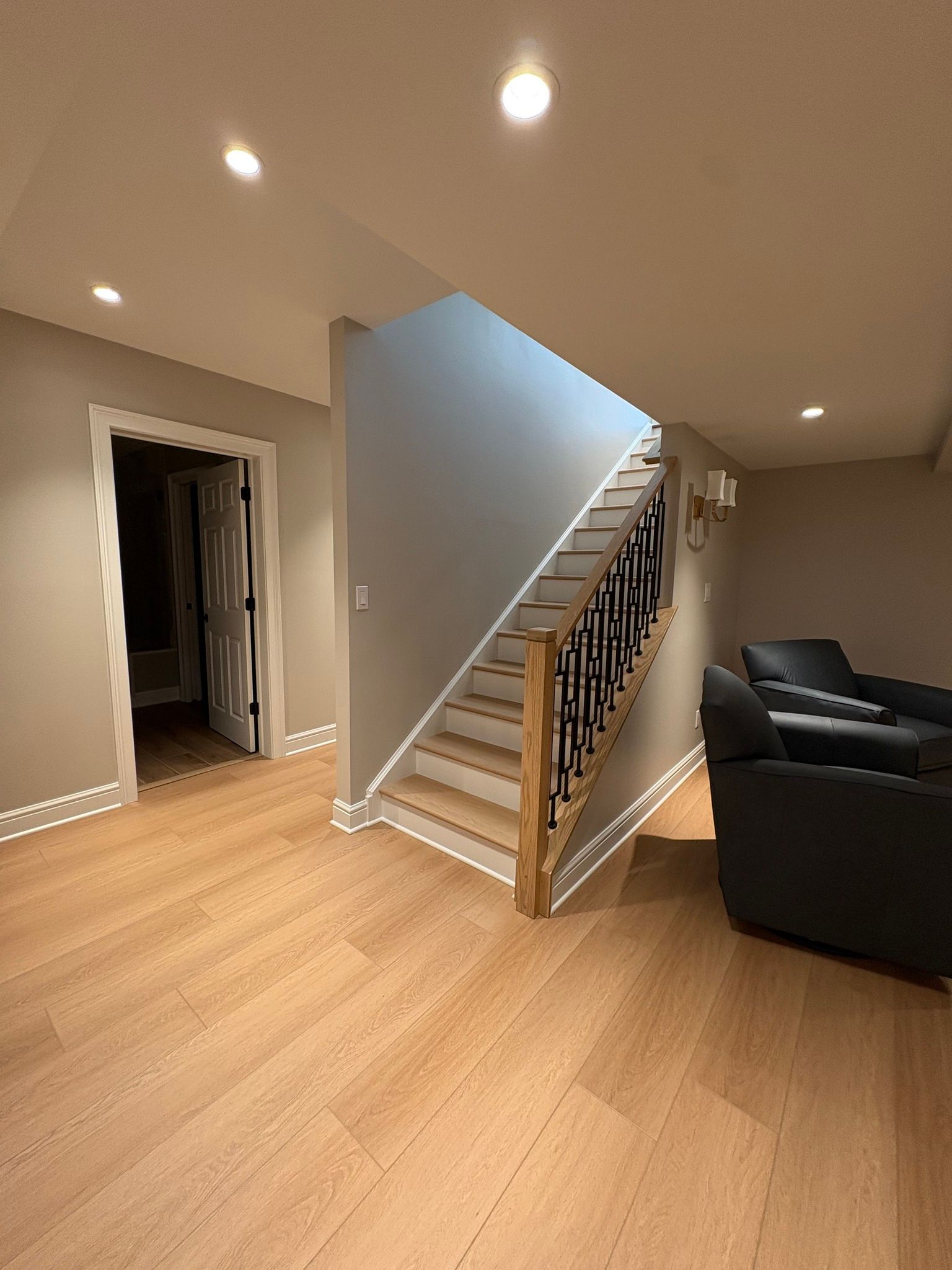
Finished basements operate as independent living zones with separate HVAC supplies, dedicated electrical panels, and lighting controlled by dimmers or smart switches that adjust based on room use. Soundproofing installed during framing includes resilient channels that decouple drywall from joists, batt insulation that absorbs sound transmission, and acoustic panels in entertainment areas that reduce echo and improve audio clarity.
You'll notice consistent temperatures maintained by insulated walls and sealed rim joists that prevent drafts and heat loss common in unfinished basements. Ceiling finishes like drywall, drop tiles, or exposed joists painted in uniform colors increase headroom perception and conceal ductwork, plumbing, and electrical runs without sacrificing access for future repairs. Multi-purpose room designs include wet bars with sinks and beverage refrigerators, built-in shelving for storage, and flexible furniture layouts that adapt to different activities without permanent wall divisions.
Code-compliant layouts ensure bedrooms include egress windows, bathrooms have proper ventilation, and stairways meet riser height and handrail requirements enforced during final inspections. Lighting design layers ambient, task, and accent lighting to eliminate the dim, cave-like feel of basements lit only by overhead fixtures, using recessed cans, wall sconces, and LED strips to highlight architectural features and functional zones.
Questions Before Starting Your Project
Homeowners in Pittsburgh often ask about moisture prevention, ceiling height restrictions, and egress window requirements before committing to basement finishing projects.
What moisture control measures are necessary before finishing a basement?
Moisture control includes vapor barriers on foundation walls, drainage systems that direct water away from the foundation, dehumidifiers that maintain humidity below 50 percent, and sealants applied to concrete floors and walls to block moisture vapor transmission.
How are egress windows installed in existing basement foundations?
Egress window installation requires cutting through foundation walls, excavating window wells to code-specified depths, installing properly sized windows that meet opening dimensions, and adding drainage systems that prevent water accumulation in the well.
When should basements not be finished due to structural or moisture concerns?
Basements with active water seepage, foundation cracks wider than hairline fractures, or ceiling heights below code minimums should address those issues before finishing work begins, since moisture and structural problems worsen once concealed behind finished walls.
How does soundproofing work in basement ceilings to reduce noise transfer?
Soundproofing uses resilient channels that create air gaps between drywall and joists, combined with dense insulation batts that absorb sound waves, which reduces impact noise from footsteps and airborne noise from conversations traveling between floors.
What plumbing options exist for basement bathrooms below the main sewer line?
Bathrooms below sewer grade require sewage ejector pumps that grind waste and pump it upward to the main sewer line, with systems installed in pits below the basement floor and vented to prevent odor buildup.
Shamrock Renovations LLC coordinates moisture control, egress window installation, plumbing rough-in, and finish carpentry to deliver basements that function as comfortable, code-compliant living areas. Book a consultation to review your basement's current condition, layout goals, and feature priorities before planning begins.